
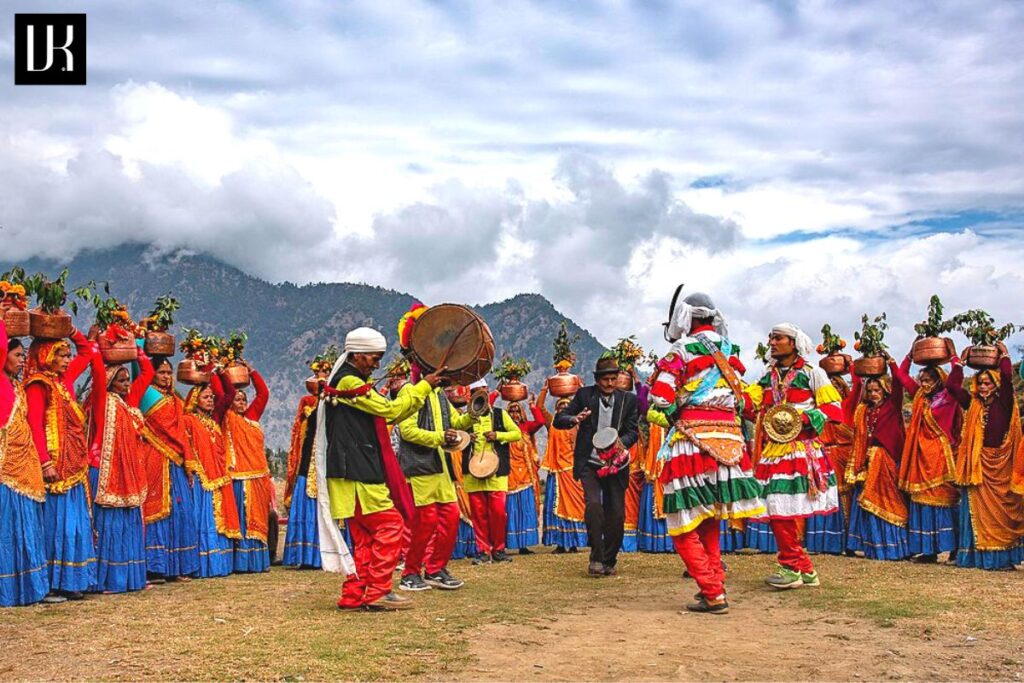
Nature has always provided inspiration to lovers of art. Motivated by the plethora of natural resources and beauty that Uttarakhand has to offer, the inhabitants have made a great significance in the field of art.
To know more about a place, delving into its art and culture is very important. From ancient times, Uttarakhand’s love for art and craft is evident in the magnificent and unique architecture of its temples and houses.
The fairs and folk dances of the nation that are still cherished by rural communities serve as a testament to the state’s incredibleness. People of Uttarakhand reside in both rural and urban areas, and the economy of the state is mostly based on tourism. In this lovely highland state, the locals also make a living by selling artisan goods, handicrafts, operating cafes and homestays that offer the lip-smacking traditional food of Uttarakhand.
“Maula Ram” is said to be the father of the Garhwali art form style. The Garhwali artwork is said to be developed in the Darbar of Raja Prithvi Shah by two artists Shyamdas and Hardas who came from the Mughal Darbars. The illustrations of the Ramayana, the paintings of Krishna, Radha, Shiva, Parvati, Utkat Nayika, and Abhisarika Nayika as well as the exquisite portraits depicting the beauty of the women of Pahad, are some of the widely acclaimed and adored works of the Garhwal School of Painting. The University Museum in Srinagar, Garhwal, has extensive collections of these paintings on exhibit in addition to a large number of sculptures and artefacts from archaeological digs.
Uttarakhand has a very distinct folk art named Aipan. Aipan art of Uttarakhand is the chief art form of the state which is indigenous to the Kumaon region and is deeply rooted in both cultural and religious aspects. It is a beautiful design with minute details made with a mixture of rice and water, it is usually made on every special occasion like festivals, poojas, housewarming and birthdays. It is made on the floors of houses, on clothes and on idols. Aipan art form of Uttarakhand is carried over through generations, and mothers pass it over to their daughters and so the tradition moves on.
The people of Uttarakhand are also well versed in wooden arts. By trimming the wood, they make several articles and wooden vessels, preparing baskets with jute is a conventional work of Uttarakhandis. The Ringaal handcraft, which is conserved by the tribal groups of Uttarakhand, is another element that gives the art and craft of that state charm. Additionally, Ramban’s jute and hemp-based handicrafts demonstrate the region’s wealth of artistic talent.
People with creativity and artistic blood abound in Uttarakhand. The stunning wood carvings may be seen in the temples and palaces in Uttarakhand.
In addition to this, residents of the state also experiment with jewellery creation, candle-making, and painting to provide eye-catching attractions. Talking about woollen clothes and mats, Munsiyari, Chamoli, Pithoragarh, Almora and Uttarkashi are popularly known for this kind of craft. Local craftsmen are best known for making caps, sweaters, mats, shawls etc. Tourists are very fond of these articles and get very elated by these handicrafts.
The unique dresses and ornaments worn by people in this state are also an art in itself. Men’s typical outfit includes a kurta, pyjamas, vest coat, and a pahadi cap. Women in various parts of this hilly state don a variety of garments that exhibit an amazing range in style, colour, and pattern. Saree, sarong with an odhani (veil), Khorpi and blouse, Ghaghra choli or Rangwali Pichora are some of the popular regional attires worn with uniquely styled Ornaments like Bulaq, Nath, Pahunchi and Galoband on special occasions that make them all the more beautiful.
People in Uttarakhand are still seen wearing their traditional attire today, showing just how masterfully their cultural history has been preserved by them. With such a rich culture and art that Uttarakhand has to offer to the tourists, it is surely a must-buy destination for art and craft enthusiasts.